Pages

Showing posts with label Dobies Seeds. Show all posts

Wednesday, 8 May 2013

Growing asparagus


Asparagus  - asparagus officinalis
Asparagus is arguably the queen of vegetables. This is partly because of its fairly short season, particularly in the UK, its exquisite delicate flavour, the perception that it is tricky to grow and its undoubted high cost in shops.
One of the downsides of eating asparagus is the nasty smell experienced by many [though not all people who eat it]. It has long been believed that asparagus changes the smell of our urine, giving it a stench reminiscent of bad drains. However, on discussing this with a plant scientist recently who had done some work on this subject, she assured me that asparagus does not, in fact, alter the odour of our urine but, actually affects our sense of smell though, not in all subjects.
Sowing and Growing
Growing asparagus can be tricky but it is worth the effort even if your plot is less than ideal.
Although it is possible to grow asparagus from seed and it is certainly cheaper to do so, it does add another year to an already impatient wait until harvesting. Although I haven’t tried this method, if you would like to try it I recommend Nicky’s Nursery [www.nickys-nursery.co.uk] as being a reliable source of an excellent range of seeds, including organic and Heritage varieties.
Although I do love large garden centres - they inspire me, encourage me to spend money, keep me up-to-date with new products and developments in gardening and plants - they really are the last place to buy asparagus crowns. They come in polythene packets with very pretty and tempting illustrations, in a bed of very desiccated peat, where they have probably been hanging for some weeks, if not months. Each packet will probably contain 2 – 3 crowns where an odd shoot or two might just be visible to indicate a small sign of life. The chances of these crowns surviving is very touch-and-go and do need perfect conditions to establish.
Do buy your crowns from a reputable provider. It is usual to buy one-year-old or two-year-old crowns but some of the seed houses will supply three-year-old crowns which can save another year of waiting until harvesting. [though it is felt that younger crowns establish better.]
To plant – create a large raised bed [within a framework or not].
The crowns will need a well drained [sandy soil] and fertile site in a sunny situation. You must consider the site you have, which may not be suitable for growing asparagus. I grow in a very heavy clay soil yet, can still achieve an excellent asparagus crop for my own uses and to share with my friends. Create a good asparagus bed – for a bed for 10 crowns – think of an area of 3metres x 1.5 metres allowing for a staggered planting. I find it best to create a bed on a level with the surrounding ground then add loads of well rotted manure and compost [garden compost or bought-in] to a fairly high level several months before planting my crowns.  A wooden framework for this purpose is useful but, is not essential. Consider also that this bed will be more-or-less permanent as you can expect to harvest from these plants for around 20 years once they are well established.
Dig this out to allow for planting the crowns 20cms [8in] and the growing tips covered by 4 – 5 cm [2 inches] of fine soil or compost. Spread out the spider-like roots around the area and cover with compost or well-worked soil to give a good covering and growing environment. If the new plants are already putting up new shoots, you can allow them to appear above ground. The finished bed should be several inches – 6 – 8 [15 centimetres] above the surrounding ground. It is important to keep this area well weeded over the coming seasons.
If you are lucky enough to be growing on a light, sandy, well drained soil, it is not essential to create a raised bed, or even advisable as the beds could become too dry.
Water the bed well in dry weather.
The ferns can grow to a height of 1 metre and can be susceptible to wind rock, so support will be necessary. Keep the beds well weeded [don’t use a hoe]. As the ferns turn yellow in autumn they can be cut off leaving the bottoms of the stems a few centimetres above ground. Remove any debris, weeds or leaf litter and mulch the bed well to protect the crown during the winter.
Types and Varieties
Asparagus is a spring to early summer crop and the varieties you choose will dictate the when you will harvest. Some providers will offer a variety which can extend your harvesting period. It is thought that male plants are superior as they can live longer and the plants are not weakened by the production of seeds and many providers will claim that the crowns they are selling are male only. However, the seeds can be removed from the ferns as they develop and the female plants often produce thicker spears.
Connover’s Colossal is an old favourite which is still available but, there are many new varieties now available. The new purple varieties are considered to be sweeter and more tender than the green varieties and are delicious raw in salads [the sellers claim] but, do check what is available from the seed houses before you buy. For a good range of products try Thompson and Morgan – www.thompson-morgan.com, Marshalls – www.marshalls-seeds.co.uk, Suttons seeds – www.suttons.co.uk  , Dobies seeds – www.dobies.co.uk 
Harvesting and Storing
Asparagus should not be harvested for two to three years after planting [depending on the age of the crowns you buy] – the ferny tops should be allowed to grow to ensure the roots are well fed for the following year.
You can start to harvest – using a sharp knife, cut the stems below the level of the soil once the spears are 5 – 6in [12 – 15cm] high – from April into early June [depending on the variety.] You must stop harvesting by mid June to allow the next spears to grow to their ferny maturity which will build up the plants for subsequent year’s crops.
Asparagus should be cooked as fresh as possible but will keep in a fridge, in a polythene bag for up to three days.
To freeze – clean the spears well, cut off the tough ends. Sort the spears into small bundles depending on the thickness of the stems. Blanch them for 2 to 3 minutes, drain, cool and pack into suitable containers to freeze.

Nutritional Value
Excellent source of
Useful amounts
Traces

Vitamin C
Vitamin K
Fibre
Vitamin A
Vitamin E
Folate
Fat, Protein [incomplete]
Niacin, Thiamin and B6
Calcium, Iron, Magnesium, Phosphorus, Zinc
Potassium, Copper, Manganese, Selenium

Pests and Diseases
Pigeons – will eat the young growth from any young plants on our plots when nothing else is available. They will eat their way through the young spears as they appear above ground.
Slugs and Snails – Although not a serious pest, slugs and snails will eat the tops of the young spears as they appear.
Spindly shoots – if your crowns are having difficulty establishing after planting they may put out spindly, thin spears. Don’t attempt to harvest them. It is possible that, with good management and feeding, the crowns will improve. However, if this continues into a second year, it is probably best to abandon them and start again on a new bed.
If you harvest your spears too soon – before they have become established – you are likely to have spindly growth in the following year. You can try feeding them well and don’t harvest for a couple of years until the spears have become thicker and more plentiful.
If you continue to harvest too long into the season, the crowns will not have the time to develop enough ferny tops to nourish the crowns for the following year. Don’t harvest after early June.
Asparagus Beetle – is probably the worst pest of asparagus especially in the allotment situation where other growers are also dealing with this serious pest. If you are growing in a garden away from any other growers, it is not likely to be troublesome.
The beetles themselves don’t do any harm except to lay the eggs of this very specific plant pest. The larvae, are the main problem and will eat the ferns and the stems resulting in a reduced crop or no crop in the following year.


Remove the beetles as you see them and crush them along with any larvae you see [I advise wearing fine rubber or nitrile gloves for this purpose as they are unpleasant little pests]. It is a good idea to check every day or at least every time you visit your plot.

Thursday, 19 April 2012

Late April on the Allotment


Late April on the Allotment

I’m pleased to see the rain, yes, really I am and, of course it is April, when we expect a bit of rain. I’m sure farmers and commercial growers are very relieved as water is needed on crops especially when they are trying to get them established. But! I really do wish it was a bit warmer and with a bit more sunshine between showers. The birds, nesting now, are desperate for food and my robins are waiting for me each time I come to the plot. They can be quite in my face!
I have had a nasty little, flu’ like virus for a couple of weeks and I feel it has put me somewhat on the back foot as far as my allotment work has gone, especially planting my main-crop potatoes. I have now managed to get my Sarpo Mira seed in the ground [ after several years of experimenting with different varieties, I’m really taken with these. They have an excellent balance of disease and pest resistance and good flavour... and... they keep well. I only finished my crop from last year in mid February and they were still good].  I bought all of my seed potatoes from Thompson and Morgan. While I have whinged, in the past, about T&M delivering seed potatoes far too late to chit properly, this year the service has been excellent. And, they do have an excellent selection. This year I have found it particularly difficult and wearisome planting the potatoes. I’m hoping this is just because I’m been a bit under the weather and not because I’m getting past it!  However, I was chatting to a fellow plotter in the last few days who has told me that he doesn’t dig ridges for his potatoes any more – he uses a large bulb planter instead. Now that might be a method worth trying next year – at least for some of them, as a trial.
My 1st early potatoes in the polytunnel [Vales Emerald] are already putting on flower buds so, perhaps in a few weeks I will be able to start harvesting. I see the outdoor sown Vales Emerald are also well up – still under a protective layer of fleece to protect them from the frost. I have never tried this variety before – I had become quite fond of Accent as my 1st early but, this year I was unable to get them. The Vales Emerald are not, at the moment inspiring me, they certainly don’t seem to be as robust as Accent and a couple of the plants have failed to grow or have died back though, I wonder if this is due to red-ant nests which are in the vicinity. I would prefer to live with the ants but, poly-tunnel space is precious and perhaps I need to be a bit more jealous of this space.
I moved most of my young tomato plants, and a few chilli plants to my polytunnel about three weeks ago [although I can propagate them at home, I can’t provide the young plants with enough light]. I covered them with fleece until they had settled in then took the fleece off. Unfortunately, on the same day I took the fleece off we had a really hard frost. The surprising part was that the chillies were fine, tomato F1 Fantasio was fine but, Alicanti was seriously hit by the frost. That said, I won’t resow as most of the affected plants have put out side shoots which will still be way ahead of any new sowing I would make.
I have now moved lots of my seedlings, including my first batch of sweetcorn, [F1 Earlibird from Dobies] to my ploy-tunnel but, am careful to keep them covered with fleece until this cold spell has passed. I hope the weather will have warmed up by the beginning of May and I can plant my first batch of sweetcorn out. I do have another variety F1 Rising Sun [ also from Dobies] which I will leave for another week before sowing. If they all germinate as well as the Earlibird and produce good crops I will have far too much sweetcorn. But, in the past I’ve been disappointed by some crops so I’m spreading my bets. Last year I tried an experimental plot of Butcher’s Blood [a red seeded variety]. I found germination rate poor but, those seeds which did germinate, grew into tall strong plants. Unfortunately, I found the cobs tough and rather tasteless. But you have to keep trying new stuff, you never know when you will come up with something magic.
Now, at last, I have found a courgette which I actually like – F1 Orelia [ Dobies seed]. It has a golden skin and the flesh is dryer and denser than the more common zucchini. Unfortunately, last year I only had one seed germinate and this year- so far – I have had three but, guess what, I’ve broken one ! It still survives and might just make it but, I’ve resown just in case. However, I’m losing faith in my ability to germinate them... they should be easy. What am I doing wrong? Is my propagator too warm? Perhaps too cool? Should I just try them on the window sill? Any ideas would be gratefully received. Perhaps I should just get my daughter to grow them for me!
Last year I had real difficulties germinating peppers and chillies. This year, of the three varieties I’ve sown, I seem to have about 100% germination and can give them away. I think last year, the temperature of my propagator may have been too hot. Any thoughts?
My daughter loves all the different varieties of chillies she grows each year. However she lost the label on one plant she gave me. It produced purple fruit about 2cm [1 inch] long which turned red when properly ripe. Of course I dried the chillies for use over the winter. These babies are absolutely lethal! I scrunched a little one up into a curry I was making and, of course, washed my hands well afterwards. An hour later I was working on my computer and rested my chin in my hands. My face started to burn so, I rubbed it again and the burning spread to everywhere I touched. This pain lasted for quite some time! Gosh I will never learn!
So far this year I have sown two different varieties of peas. On 6th March I sowed 4 packets of Little Marvel, an early variety. I covered them with fleece, as much to protect them from predators as from frost. They are now about 15cm high [6inches] and I have staked them already. I also sowed Hurst Green Shaft on 20th March. They are still under a layer of environmesh but in the coming week I will remove this also and stake them. They are looking good.
Following advice I was given a couple of years ago on growing a pea crop – I sow lots of seed into each trench. My plot is about 5 metres wide. I will create three trenches about 3 – 4 cm deep [1½ inches]. I have divided 4 packets among the 3 trenches which is really fairly dense sowing. However, compared with the advice often given on sowing pea seed, this method has had spectacularly successful results. Let’s face it, the seed is not so expensive that we need to be precious about each seed. My crop last year filled a complete drawer of my freezer with bags of frozen peas. I am just coming to the end of them now.

Thursday, 23 February 2012

Late February on the Allotment


Late February on the Allotment
The last time I wrote a blog was a couple of weeks ago. While I have sown seeds I am still trying to hold back as our weather here turned bitterly cold with hard frosts and damaging winds. We did have a few flakes of snow which lay overnight but, disappeared the following morning. It’s a pity as, many of the plants which had survived the ‘real’ wintertime were seriously affected by this late cold-snap. As always, we will take what the weather throws at us and work with it.
I have been most dismayed to learn from our News that there has been so little winter rain [when we expected it to refill our reservoirs and rivers] that we are in a potentially drought situation for the coming spring and summer months. I suppose I should be relieved that this doesn’t affect the South West – yet! We have had a lot of rain during January. However, for the East of England and swathes of the Midlands where a large proportion of the crops which supply the shops and homes in this country are grown, this will affect the cost of products to households that are already hard-pressed financially and, to the growers who have also had damaging set-backs during the last couple of years from harsh weather. We must hope that these concerns don’t become a reality.
I have planted my first early potatoes in my poly-tunnel last week. This year I’m trying Vales Emerald from Thompson & Morgan. The Potato Council says about this potato:-
An outstanding early bulking variety with attractive appearance on the shelf and excellent flavour. With 25% higher yields than existing punnet varieties, Emerald is proving to be extremely popular with growers and retailers alike.
In previous years I have grown and enjoyed Accent as my First Early of choice but, this year I was unable to find the seed – pity! I did like them.
I have only planted half of these seeds in my tunnel. The rest will be sown outdoors from the middle of March – weather allowing! For the first time, I still have some potatoes left from last year’s cropping which will almost last until the new crops are ready. I did give a couple of bags away, perhaps I will be meaner next year. I have been quite disappointed in some of the supposed ‘maincrop’ potatoes I grew. While Sarpo Mira and Sarpo Axona have continued to live up to their reputation on all fronts, British Queen kept poorly and the last half bag of them has been dumped. This was a new one for me to try and I won’t try it again though, perhaps I lifted them too early and the problem lay with my treatment of them.
I have taken a risk with sowing a variety of seeds in my propagator during February. Of course, the issue is not that of providing enough heat to encourage the seeds to germinate but of providing enough light with adequate heat once they have germinated. There would be no problem if I had a heated greenhouse or conservatory but – I don’t. I have been very pleased this year that all of the chilli seeds I’ve sown. 100% germination - 10 out of 10 seeds sown [Joe’s Long from Dobies, my favourite variety]. You don’t get many in a packet and it is important that at least some of them germinate. Last year my first sowing gave me 0% germination and my second sowing a mere 25%. I don’t think I can blame the seeds. I think the level of heat I provided was too great so, this time I’ve set the temperature in my propagator to 50%.
Now, of course, I must find a way of providing enough light until it is mild enough to move them to my poly-tunnel.
I have, already, moved my leek seedlings [Musselburgh from Dobies] and my early lettuce seedlings [Cos – Vaila, Winter gem, from Dobies] to the tunnel. Both should be hardy though, maybe not hardy enough to be planted outside just yet. Last year my Winter Gem lettuces were outstanding and stood over a long period – I seriously recommend them. I intend to plant some out in my ploy-tunnel for early consumption and a few more outdoors next month for later. They can, of course be resown to extend the harvest time. Like all ‘Cos’ type lettuces they are a robust crunchy type of lettuce. I’m not much of a fan of the softer varieties.
The leek seedlings are in a fairly deep tray but, will probably need to be transplanted to a growing-on bed before planted out to their final bed. Last year’s disastrous germination, which resulted in me begging seedlings from neighbours and from my daughter have, in the long run, provided me with an outstanding and very excessive crop of leeks which I’m now struggling to give away. Still, winter is not over yet.
On my trip to my allotment this morning, mostly to feed the birds, I see that my white sprouted broccoli are starting to shoot at last. A few, very raggy purple sprouting are also starting to sprout but, I have not covered them and I see that the resident pigeons are enjoying the leaves – I might leave those plants for the birds.
I do see Spring on the way. My ‘no-dig’ area where I keep my spring bulbs is already showing encouraging signs of spring.

Sunday, 25 September 2011

Preparing for winter 1

Preparing for a harsh winter 2011
Well, it may seem silly thinking about winter now and considering what we must do to prepare for it. Of course the weather forecasts – (I won’t say ‘long range’ as the hard weather is being forecast for as early as next month and that is only a week away), may well be a load of rubbish. What happened to the ‘barbeque summer’ we were forecast for summer 2011 and, when I think about it, for 2010?
None-the-less, it doesn’t do any harm to be prepared. If the winter coming is even close to last winter, then we can take some steps to avoid the worst of the damage.
It isn’t snow which can affect us worst. In fact, snow can act as a blanket for many plants, protecting them from the harshest of the weather. It is the deep frost. This affects the more tender plants like globe artichokes, seasonal vegetables like brassicas and any potted plants as the frost will penetrate right through the compost and kill the roots. Last year I lost all of my rosemary plants as they were all in large pots. When I looked to replace them, garden centres had suffered similar losses. This year I will move some of my potted plants into my poly tunnel and will fleece others.
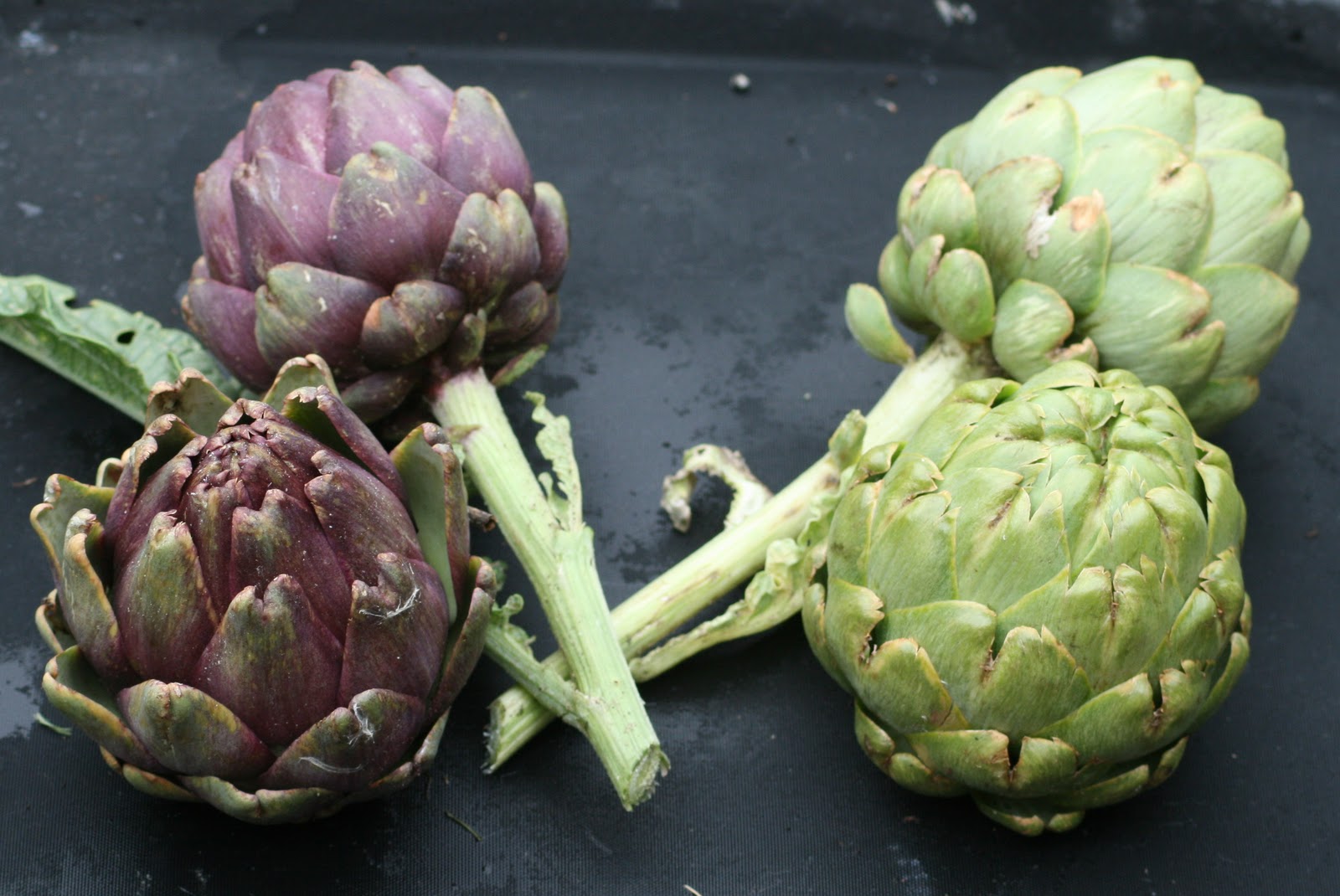
The advice on protecting globe artichokes is to cut them back and cover with a blanket of straw. So far I have resisted doing this as I find it painful to cut back strong fresh growth but, last winter I lost 50% of my strong, established artichoke bed and neighbours complained of 100% loss.
One of the main problems last winter was the inability to prepare the ground for the following spring. I am no longer able to dig half an allotment in a day. I have to pace myself and there is a lot of ground to cover. This year, as I lift crops, such as potatoes, beans and carrots, I am digging the ground ready for the winter frost to do its job of breaking down the soil. Yes, at this time of year, a few more weeds will still grow but, the basic job will have been done and will make it all the easier in the spring. And, the birds love it!
Talking about birds, when I returned from my holidays, I found a small bird of prey – I think a sparrow hawk – dead on my plot. I hope it was nothing that I had done which resulted in its demise. I am trying to replace all my netting with stronger and less-destructive-for-birds netting which, although more expensive, will be kinder. I avoid using slug pellets, except on seed beds and try to use only sprays which are organic. I have three feeding stations on my plot for birds which I replenish each time I visit. In spite of this I feel guilty that this bird had died, in case it is something that I might have done.
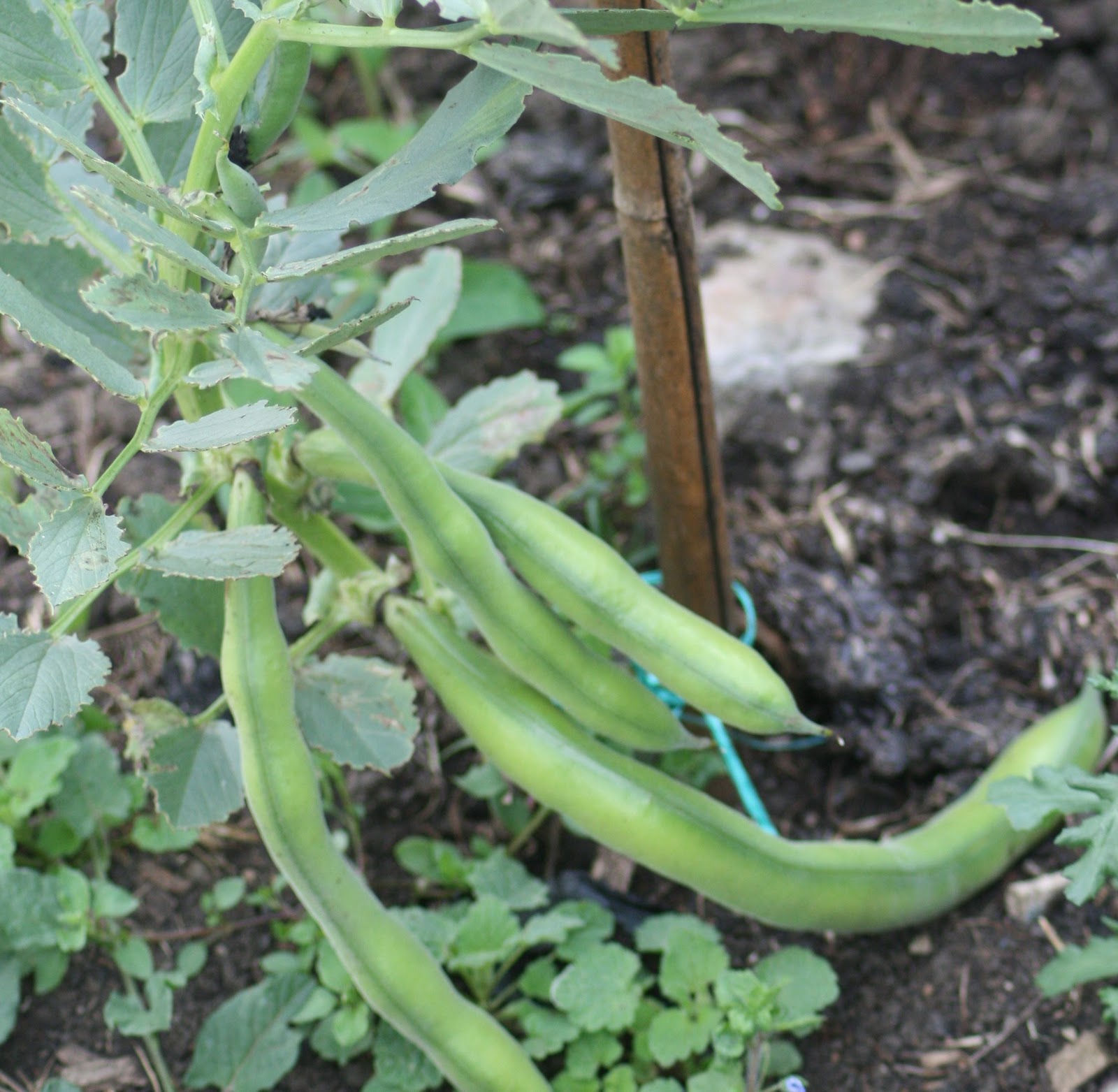
 I will sow autumn broad beans, as I find that overwintered beans provide an earlier and more robust crop than spring sown ones. They are also less prone to damage from blackfly. My beans did survive last year’s harsh winter but were not brilliant. Keeping this in mind, should we have another poor winter I will consider spring sown beans and treat them accordingly.
My Runner-beans and French-beans have now finished producing. Any pods still lingering are much too tough and stringy for eating though, of course, they are very suitable for saving for seed. Do remember that beans are promiscuous and the seed you collect may not be true to the parent plant.
When you are removing the frames, cut the bean plants off at the surface of the ground, leaving the roots as these fix nitrogen in the soil (it has been suggested that planting beans in the same area each year is beneficial as the nutrients needed for future generations are fixed in the soil. If I wasn’t pushed for rotation for other crops I would consider this.
Make sure the bamboo poles are stored upright out of any prolonged wet conditions. Leaving them on the ground will ensure they rot and they will be useless next year. They are an expensive resource so, one to look after.
I think I have had most of my seed catalogues this autumn. Sadly, only my favourites – Dobies and the Realseed Catalogue are still missing. I do love planning for next year. There are several days of pleasurable activity in  this.
In the last week I have been writing letters to plot holders who have not been cultivating their plots. This is good news for potential members who have been waiting for two years or more. Starting with a new plot is definitely an issue worth approaching again.