Pages

Showing posts with label artichoke. Show all posts

Sunday, 25 September 2011

Preparing for winter 1

Preparing for a harsh winter 2011
Well, it may seem silly thinking about winter now and considering what we must do to prepare for it. Of course the weather forecasts – (I won’t say ‘long range’ as the hard weather is being forecast for as early as next month and that is only a week away), may well be a load of rubbish. What happened to the ‘barbeque summer’ we were forecast for summer 2011 and, when I think about it, for 2010?
None-the-less, it doesn’t do any harm to be prepared. If the winter coming is even close to last winter, then we can take some steps to avoid the worst of the damage.
It isn’t snow which can affect us worst. In fact, snow can act as a blanket for many plants, protecting them from the harshest of the weather. It is the deep frost. This affects the more tender plants like globe artichokes, seasonal vegetables like brassicas and any potted plants as the frost will penetrate right through the compost and kill the roots. Last year I lost all of my rosemary plants as they were all in large pots. When I looked to replace them, garden centres had suffered similar losses. This year I will move some of my potted plants into my poly tunnel and will fleece others.
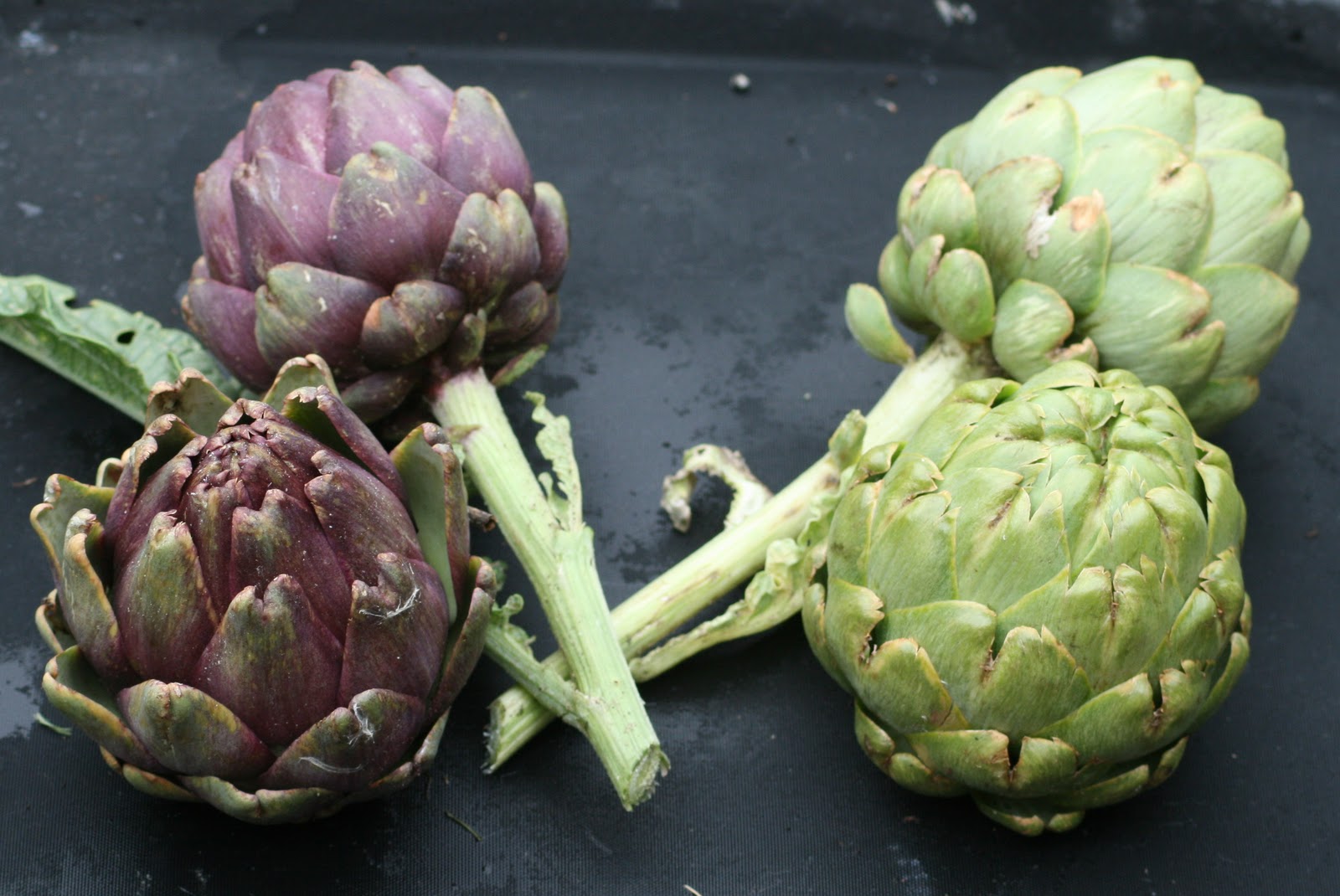
The advice on protecting globe artichokes is to cut them back and cover with a blanket of straw. So far I have resisted doing this as I find it painful to cut back strong fresh growth but, last winter I lost 50% of my strong, established artichoke bed and neighbours complained of 100% loss.
One of the main problems last winter was the inability to prepare the ground for the following spring. I am no longer able to dig half an allotment in a day. I have to pace myself and there is a lot of ground to cover. This year, as I lift crops, such as potatoes, beans and carrots, I am digging the ground ready for the winter frost to do its job of breaking down the soil. Yes, at this time of year, a few more weeds will still grow but, the basic job will have been done and will make it all the easier in the spring. And, the birds love it!
Talking about birds, when I returned from my holidays, I found a small bird of prey – I think a sparrow hawk – dead on my plot. I hope it was nothing that I had done which resulted in its demise. I am trying to replace all my netting with stronger and less-destructive-for-birds netting which, although more expensive, will be kinder. I avoid using slug pellets, except on seed beds and try to use only sprays which are organic. I have three feeding stations on my plot for birds which I replenish each time I visit. In spite of this I feel guilty that this bird had died, in case it is something that I might have done.
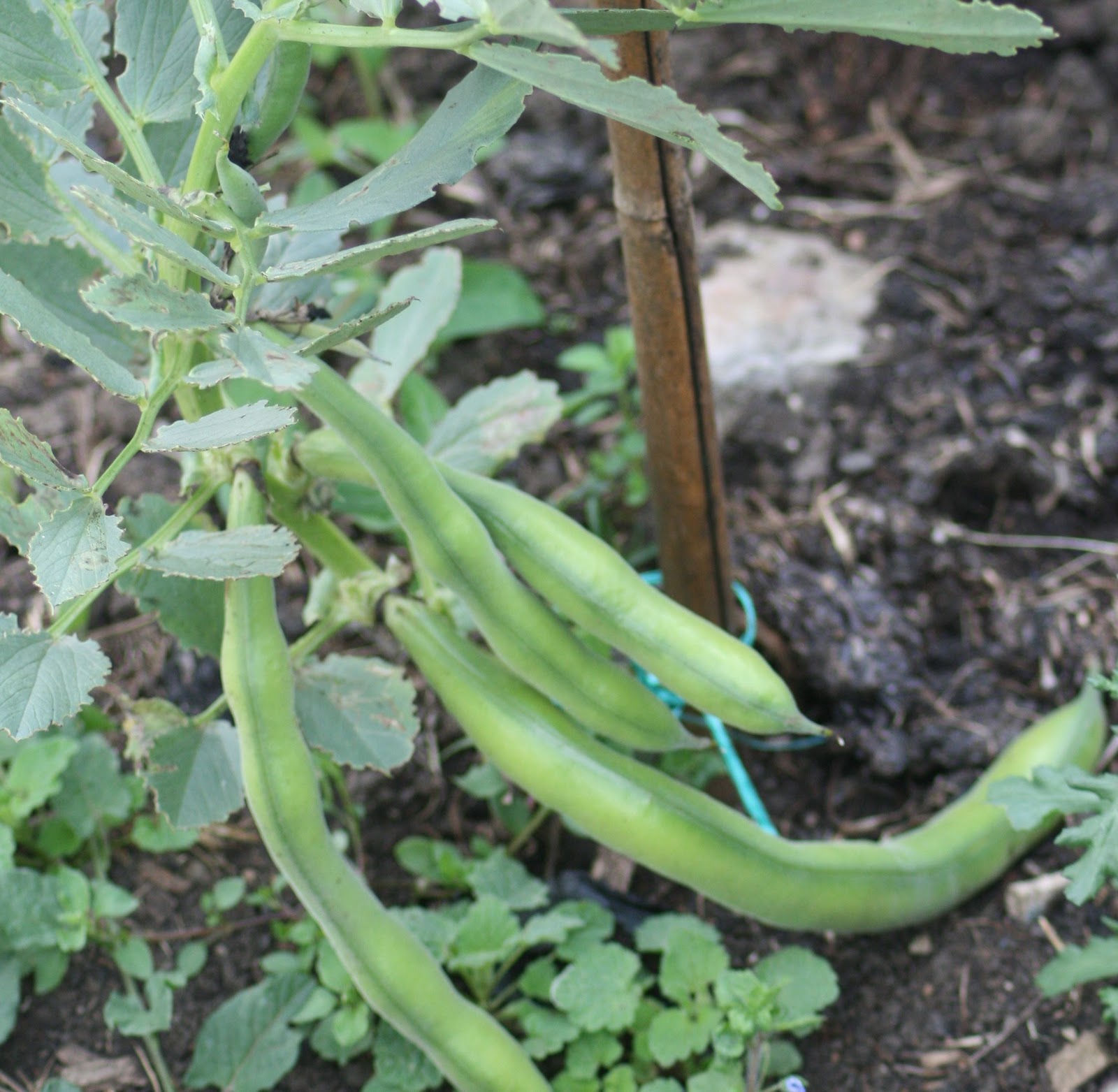
 I will sow autumn broad beans, as I find that overwintered beans provide an earlier and more robust crop than spring sown ones. They are also less prone to damage from blackfly. My beans did survive last year’s harsh winter but were not brilliant. Keeping this in mind, should we have another poor winter I will consider spring sown beans and treat them accordingly.
My Runner-beans and French-beans have now finished producing. Any pods still lingering are much too tough and stringy for eating though, of course, they are very suitable for saving for seed. Do remember that beans are promiscuous and the seed you collect may not be true to the parent plant.
When you are removing the frames, cut the bean plants off at the surface of the ground, leaving the roots as these fix nitrogen in the soil (it has been suggested that planting beans in the same area each year is beneficial as the nutrients needed for future generations are fixed in the soil. If I wasn’t pushed for rotation for other crops I would consider this.
Make sure the bamboo poles are stored upright out of any prolonged wet conditions. Leaving them on the ground will ensure they rot and they will be useless next year. They are an expensive resource so, one to look after.
I think I have had most of my seed catalogues this autumn. Sadly, only my favourites – Dobies and the Realseed Catalogue are still missing. I do love planning for next year. There are several days of pleasurable activity in  this.
In the last week I have been writing letters to plot holders who have not been cultivating their plots. This is good news for potential members who have been waiting for two years or more. Starting with a new plot is definitely an issue worth approaching again.

Wednesday, 1 June 2011

Having a New Plot

Taking Over a New Plot
I have written about this before, when I first started writing my Blog but, at this time of year many allotment associations are carrying out annual plot inspections, in part so that prizes can be awarded to be best gardeners but, also to see who has not cultivated their plots. In our Allotment Association we give most of our prizes to newcomers – to plot holders who have had their plots for just one year. In that way everyone has a chance to win a prize. If we gave the main prize to the best plot, chances are it would always go to the same expert gardener.
In our Association, which has six separate fields, the Field Representatives carry out regular inspections to see who is doing really well and who is not doing the business at all. It is a pity that plot holders who no longer have the time nor the inclination, for whatever reason, don’t tell their Field Rep. or a member of the committee that they don’t or can’t cultivate their plot any longer so that it can be re-let to someone who has been on the waiting list for years and is desperate to have the chance. Under those circumstances the plot is probably totally derelict – covered in brambles, couch grass and other very invasive weeds. My son, who, after waiting for about two years for a plot in Newcastle, was rewarded with a beautifully maintained half plot, with a greenhouse. How lucky was he? His predecessor no longer felt he could work his plot but left it immaculate for the next person – my son.And that is how it should be.
This is not the best time of year to be allocated a plot but, the year is definitely not wasted. It has been very dry this year in many parts of the country, especially in the south and east. This has made tilling the land quite difficult. In Bristol, where I have my plot, we have heavy clay soil. It is very fertile though inclined to being quite acid. The soil and conditions are brilliant for many important crops and I feel very privileged to have my plot. However, when it is dry, the ground splits open and can’t be dug. It is like digging bricks. Just lately we have had a little rain, enough to be able to till the ground, plant out gasping potted seedlings and do other necessary work. The forecast is for more very dry hot weather so, I do think we will have to spend a lot of time ‘moving water’.
I say new but, of course, in most cases, the allotments are not new. They have often been cultivated for a century or more. And, in many cases have been planted and harvested for years without anything going back in. So, lots of manure or other fertiliser is a priority for the coming year. If you find your plants, in spite of liberal additions of manure or other fertiliser, are turning yellow, it is possible your plot is too acid and you will need to add lime. If the ground is too acid the plants can’t access the nutrients. Take care with this, adding lime does not suit all plants and too much lime is just as bad as too little. The optimum pH (the measurement of the acidity/alkalinity of the soil) is around 6 – 6.5 for most vegetables, which is slightly acid. A pH meter from any garden shop may not give you an accurate measurement but, they are cheap and will give you an indication of a problem which needs to be dealt with.
As I said earlier, this may not be the best time to acquire a plot but, there are many crops which can still be successfully planted to gain a harvest this year.
Beans – for Runner beans or French beans – it is probably best to buy plants from the garden centre – too late to sow your own, except for beans that you intend to dry for the winter, eg, Borlotto and Yinyang beans which can be sown up until the end of July. Although Runner Beans and many varieties of French beans are climbers and will need a framework to support them( think about a robust frame 8 – 10 feet, 3 metres, high), many French beans are dwarf – my favourite is Purple Teepee.
Sweetcorn – I would suggest you buy your young plants from a garden centre as it is now too late to sow. They are, like beans, peas, courgettes, pumpkins and squashes gross feeders (ie. They need a lot of fertiliser). Make sure you plant them in blocks and fairly close together 8inches – 20cms max. distance. The plants must pollinate each other. (a couple of years ago I thought I’d be kind to my sweetcorn and gave them lots of space – 1ft(30cm) apart. They grew beautifully but, the cobs were not pollinated so, I got little from them. They are so easy to freeze so, if you like them, grow lots.
Squash, Pumpkin – Like the above vegetables, it is very much too late to sow your own but,  garden-centres should have a huge range of different types. They need lots of space as the plants spread a lot. Think a couple of square metres per plant. My preference is for a crop I can store and use during the autumn and winter. I’m not much interested in the monster pumpkins for Hallowe’en but, whatever rocks your boat! My recommendation is for small pumpkins like Baby Bear, Justynka or Hooligan and Cobnut squash. Be careful with pumpkins, some very fancy varieties may be pretty but, are actually poisonous to eat.
Tomato plants, courgette plants, pepper plants – If your climate is mild enough you might consider growing these plants outdoors. Again, it is probably too late to sow tomatoes. It is definitely too late to sow courgettes and peppers. Give the garden centres a bit of extra trade! Watch out for tomato blight (similar to potato blight).
Salad vegetables – successional sowing of lettuce, cut-and-come-again salad greens, radishes, spring onions are very encouraging, giving crops which you can now sow for yourself and harvest into the autumn.
Brassicas – that wonderful range of super-healthy green plants. I sowed some seed for winter production a week ago – Brussels sprouts and broccoli. If you don’t want to sow your own the garden centres should have a good range (gosh! At this rate they should be giving me a commission! Both of these crops are a mainstay of winter vegetables. Unless we have a winter like last year they should see you through the winter – even if you do get tired of eating purple sprouting broccoli.
Okay! Now think about the end of summer and into autumn. The ground is now tilled and crops harvested. This is an excellent time to order onion sets, garlic and shallots. They will be sent out by the seed companies (my favourite is Dobies) at the right time for planting. While they don’t really taste much different, it is nice to be able to grow and store your own onions. They say that autumn planted onion sets won’t keep, last year, due to the very dry year my onions have kept right through until the new crop is ready. And! Where is any shop you ever seen ‘wet’ garlic for sale. This is a pleasure only growers can enjoy.(young garlic bulbs-before the skins have set around the cloves- roast with roast lamb, pork, chicken – yummy!)
That is also a time to think about what you want to grow next year – what seeds you need, what perennial plants (globe artichokes, asparagus, fruit bushes/trees), potato seed – apart from eating my produce, this is my favourite occupation of autumn.

Enjoy and more later.