Pages

Showing posts with label Hot Sweet Cucumber Relish. Show all posts

Sunday, 10 August 2014

Cucumber and Gherkin Preserves

feastingfromallotments.com/ - check out my new website for more information on growing, cooking and preserves


Cucumber and GherkinPreserves
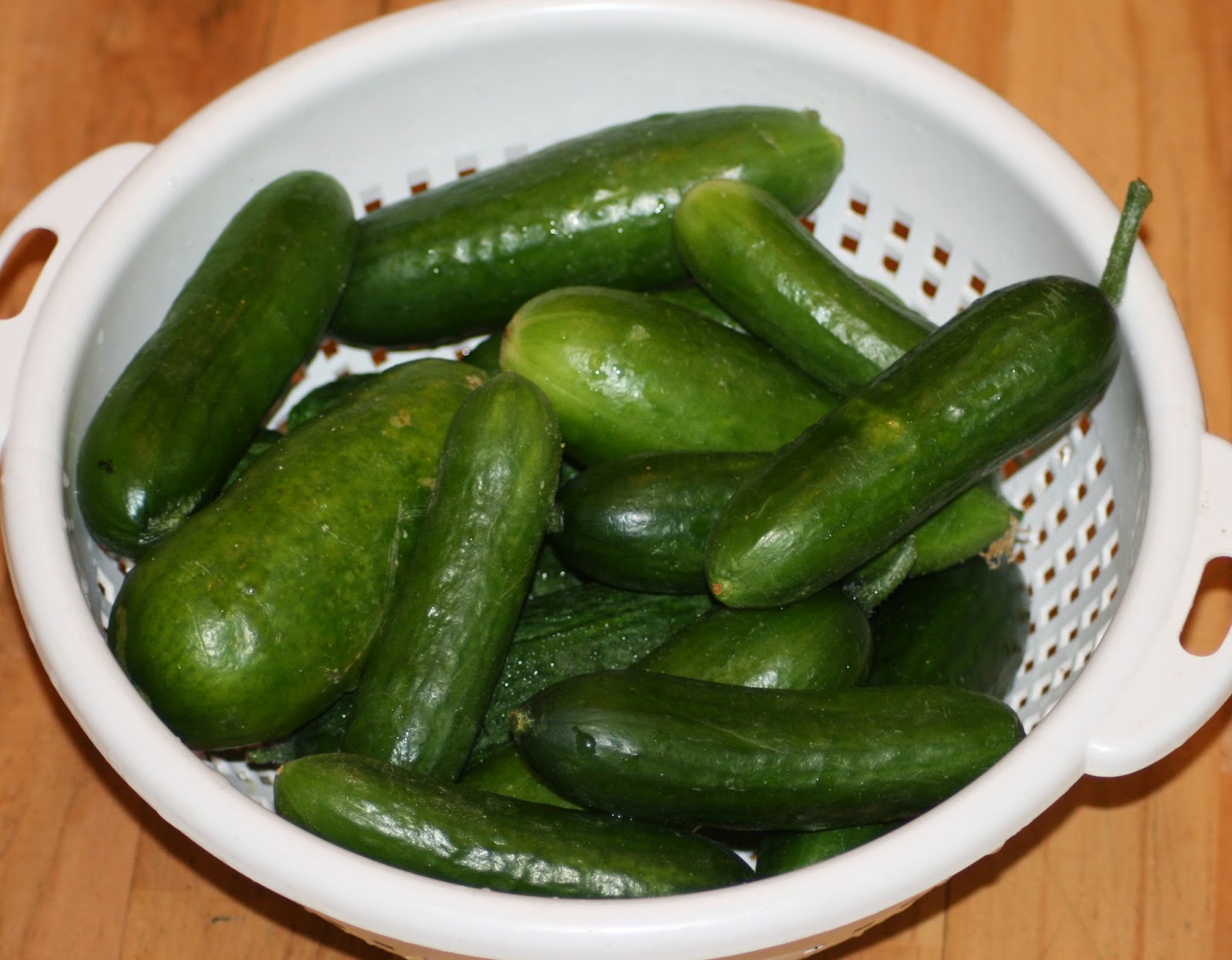
Cucumbers are doing particularly well this year. I have two plants, Passandra F1 [all female – of the five seeds I sowed in my propagator in early March, only 2 germinated and of those, only one has survived to give me a crop. It can be difficult for the allotmenter, when there is only one small propagator and limited conditions for growing on, to have the correct conditions for a variety of different demanding plants. I was happy to have two plants but, disappointed that one of them died. However, a very kind friend gave me a very strong, healthy [much stronger than mine!] gherkin plant….. I don’t know the variety, neither did she. But, as it matures and grows beyond gherkin stage the fruit is really quite spiny. I planted them outdoors as I have noticed in the last few years that in my poly-tunnel, red spider mites have been very crippling to my cucumbers grown inside.
I have given my outdoor cumbers/gherkins little attention through the season. I’m not a great believer in watering outdoor plants in dry weather [well, I just don’t have the energy for all that water carrying!] and once the plants are well established, with a bit of plant food watered in every so often – a plant food which is rich in potash - potassium is good for flower and fruit production. Any good tomato food should also work well for cucumbers.
I have provided a fairly rudimentary framework and have tied the cucumber plants up to it periodically but, I haven’t even been particularly careful about weeding. Last year, in the same spot I had small yellow heritage tomatoes and they seem to be the main ‘weed’ growing in this area. Of course, I have rooted them out every so often. In any case the cucumbers/gherkins are now well above the weeds.
Cucumbers are definitely one of the joys of summer vegetables. I’m not so keen on them in salads and sandwiches. Although, their flavour seems deceptively delicate, I find it totally overwhelms all other flavours – great if you love it. In restaurants I must request that my salads or burgers do not have cucumber. However, I do love cucumber in pickles and chutneys/relishes.
Do try a few of these below.
Pickled Gherkins or Cucumbers
Approx 2lb [1 kg] small cucumbers  or larger cucumbers cut in quarters lengthwise then into suitable lengths
4 – 5 good sized garlic cloves
1 pint [ 500ml] water                                                  ¼ pint [125 ml] white vinegar
8 oz [225 g] salt                                                          8 oz [225g] sugar
2 tsp white mustard seed                                                         
2 tsp peppercorns
2 tsp coriander seed                                                   
 [small bunch fresh dill if liked]
Method
·         Wash the cucumbers and prick all over with a fork. Place them in a bowl and sprinkle the salt over them. Leave for several hours to remove excess moisture.
·         Drain and wash well several times.
·         Put the water, vinegar, sugar and spices together into a sauce and simmer gently for several minutes.
·         Pack the gherkins into sterilised jars, with small bunches of dill if using.
·         Slice the garlic cloves and add them.
·         Pour the hot liquid over the gherkins ensuring they are filled to the top – make sure there are no air bubbles trapped.
·         Cover and seal.
·         Allow a few days for the cucumbers to pickle but these pickles are best eaten within a couple of months but once opened store in the fridge.

Hot Sweet Cucumber Relish
Like so many other vegetables in late summer, we wonder what to do with the glut. It doesn’t take too many cucumber plants to have too many cucumbers. Try this recipe as a way of using and preserving them.
Ingredients
1 kg cucumbers ( 2 lb) – don’t let them get too big or they will be full of seeds
1 kg onions ( 2 lb)
1 cooking apple
600ml white vinegar (1 pint)
3–4 red chillies(I have used Joe’s Long, use a medium hot chilli, but take care if for children)
500gm sugar ( 1 lb) – I used white sugar, but soft brown sugar will ‘warm’ the colour of the relish
2 tsp salt                                                          1 tsp allspice
½ tsp ground cloves                                        1 tsp turmeric
¼ tsp mustard powder                                                ¼ tsp ground mixed peppers( black, green, red)
Method
1.      Top and tail the cucumbers and remove the skin – cut into small cubes - ¼ cm- ish. If necessary, remove the seeds – if the seeds are still soft, you can leave them in.
2.      Peel the onions and chop finely – similar size to the cucumber.
3.      Peel and core the cooking apple and cut into fine slices.
4.      Cut the red chillies into small pieces – if you don’t want the relish to be too hot, leave the seeds out, or leave some of the seeds out. For a hotter relish add more chillies.
5.      Put the chopped cucumbers, onions, apples and chillies into a large pan or preserving pan with the vinegar and gently simmer until all the vegetables are cooked through – approx. 30 mins.
6.      Prepare the jars/ bottles – wash well and sterilise – put in a warm oven - 100ÂșC for 15mins.
7.      Add the sugar and stir until dissolved.
8.      Add the spices and salt to taste, add more salt if necessary.
9.      Simmer gently until the relish thickens – remember, when cool it will be thicker. Stir occasionally.
            Pour into the hot sterilised jars and seal immediately. Label.

Cucumber and Apple Relish
3 – 4 medium to large cucumbers  [ slice finely and chop into small pieces -  if using a ridged variety, peel the cucumbers first]       
2 medium to large brown onions – peel and chop finely
2 medium to large cooking apples – peeled, cored and chopped finely
125 g [ 5 oz ] brown sugar                         3 – 4 finely chopped or crushed garlic cloves  
570ml [ 1 pint ] white vinegar                 1/2 tsp turmeric
2 dsp yellow mustard seeds     
salt  for preparation                               
2 – 3 green and/or red hot chillies [ finely chopped – leave out the seeds if you don’t want your relish to be too hot or use  mild chillies]
Method
·         Top and tail the cucumbers then finely chop – skin if necessary – and place in a non-metal container. Sprinkle fairly heavily with salt to remove excess water.
·         Add the finely chopped onion and mix well.
·         Leave for several hours then drain the excess liquid.
·         Partially grind the mustard seeds and the chillies and add to the turmeric
·         Put the vegetables into a large preserving pan. Add the freshly prepared chopped apple, spices and vinegar.
·         Bring to the boil briefly then cook gently until all the vegetables are cooked and the apples are pulped.
·         Add the sugar then boil until the mixture starts to thicken – take care that the mixture does not ‘catch’ and burn.
·         Pack into sterilised jars, cover and seal.
·         Once opened, keep in a fridge and use within a few weeks.
[This is quite a sour pickle – not too sweet, not too hot]

Saturday, 12 July 2014

The Pickling Season


The Pickling Season

Of course, as summer progresses so do the pickling opportunities on our allotments. I find, on my allotment, that little in the way of maintenance – weeding, strimming, composting, tidying, etc is being done [although I do find time to water my poly-tunnel]. I go to my plot early to harvest then, take the crops home to process for winter supplies – jams, jellies, pickles, chutneys, frozen foods.
This has been a bumper year, so far. Especially for soft fruits, peas, broad beans, carrots, beetroot and early potatoes. French and runner beans are looking good for a heavy crop although I see there is a plague of blackfly on my runner beans. I won’t spray them. I have two teepees of them and think I will have more than I can use although I hate to see the destruction the blackfly cause, I am reluctant to use chemicals where I don’t need to.
I have just finished harvesting my pea plot – Hurst Green Shaft – wonderful variety and have the advantage of all maturing at more-or-less the same time. I have taken 4 buckets full from my four ridges from 4 packets of peas. Although it is time-consuming to pod them it is well worth the effort [I don’t blanche them. I just put them into suitable tubs or sealable bags and freeze them]. In previous years this harvest has provided me with peas over the whole winter and spring seasons
From July onwards our crops will mature and will demand that we do something with them. I can’t use all the crops that I produce but my family takes a lot of my produce and are starting now to put in their orders of what they would like. When I still have stuff over and above my needs I put it out on my garden wall inviting neighbours and passersby to help themselves – the stuff always goes.
Last autumn I was somewhat amused when I decided to ‘share’ my very bountiful pumpkin harvest. I don’t


grow gigantic pumpkins or even those suitable for Hallowe’en lanterns. I grow them to eat. However, I thought that many people might not be aware of the possible culinary uses for them and I prepared a recipe sheet of which I printed off several copies and put, in a plastic wallet, on my garden wall along with the pumpkins. An hour later, the recipe sheets had gone but the pumpkins hadn’t ! It took another few hours for all the pumpkins to go ! Whatever!
Apart from all the jams and jellies I have been making – do try the chilli jellies [if you like hot, spicy condiments], I also now have silver skin onions, beetroot, beans, cucumbers/gherkins and coming soon I will have tomatoes.
I do use my own chillies as far as possible[Joes Long] although I will buy in some very hot chillies – Scots Bonnet and Birds Eye to pep up my jellies [these chillies are VERY hot so, if you are not so keen on very hot, use another variety of chilli].

Sweet Pickled Beetroot
Allow approx. 6 – 8 medium beetroots [don’t allow them to become too big as they will become quite woody]
Approx. 1 litre vinegar –malt vinegar is fine though, of course, if you want a more refined and expensive  pickle use a wine vinegar
Pickling spices – a tsp of whole cloves, a stick of cinnamon bark, a dsp.mixed pepper seed – green, black, red, a tsp whole allspice, 2 – 3 dried red chillies[fresh if available]]
90 gm [3oz ] granulated sugar
Method
·         Wash beetroots without breaking the roots or tops as the roots will bleed in the cooking process.
·         Steam or boil until the roots are soft – use a stainless steel knife to check – it will take an hour plus, depending on the size or age of the roots. If you use a steamer it will take much less time but do keep an eye on the time.
·         Prepare the vinegar – white vinegar is good but, not necessary as it is more expensive and can be harder to get hold of. Malt vinegar is fine – I use the cheapest I can get hold of. In a large saucepan add the spices and sugar. Bring to the boil then simmer for a few minutes to allow the spices to infuse
·         When the beetroot is cooked – check with a stainless steel knife or a skewer, take off the  heat, drain and cover with cold water.
·         When the roots are cool, peel them [the skins should shuck off easily], and cut into largish cubes.
·         Pack into sterilised jars and cover with the spiced vinegar – using a skewer, make sure all the air bubbles are released.
·         Cover and store appropriately.
·         Pickled beetroot does not store as well as many other vegetables so do try to use within two to three months.

Pickling onions and shallots
I’ve used this general method for pickling shallots, gherkins/small cucumbers, cauliflower florets, silver-skinned onions or a mixture of these to give mixed pickle. Don’t use vegetables which are stale or have blemishes.
When peeling onions and shallots it is really advisable to wear rubber gloves (onion skins are an excellent dye for wool, etc and will also dye your hands – the stain lasts for days!) Do use stainless steel knives for peeling and cutting as carbon steel knives will leave black marks on the vegetables.
When I have prepared the vegetables I usually soak them in brine (salt and water) – 4 pints – 4oz salt (2 litres – 100gm approx). You will need enough brine to completely cover the vegetables. Leave them to soak for 24 hours in a non-metal container. Drain and rinse well or your pickles may be too salty.
Prepare pickling vinegar:-
It is usually suggested that white vinegar is used for pickling as it gives a much fresher colour. However, as I do a lot of pickling and malt vinegar is so much cheaper that is what I usually use – it makes no difference to the flavour. Buying already prepared pickling vinegar is expensive and does not allow you to introduce the herbs and spices you might prefer. However, it is already prepared and easy to use.
I will usually prepare a litre (2 pints) at a time and use as needed. To the vinegar I will add whole peppercorns, whole allspice, whole green and red peppercorns - when I can get them, a small piece of cinnamon bark, a few red chillies (you can use dried ones if fresh ones are not ready), fennel seed, yellow mustard seed. You can, of course use as much spice as will suit your taste and I like my pickles to be quite spicy and hot but, a tablespoonful of spices is a reasonable amount for this quantity of vinegar.
Do experiment with the spices and add Indian, West Indian or Oriental if that is your preference.
Bring the vinegar and spices to the boil and simmer gently for 5 – 10 minutes to develop the flavours. You can add a couple of teaspoons of sugar if you like your pickles to be less sharp.
Allow the vinegar to cool.
When the vegetable have been well drained, pack them into suitable jars for preserving – lidded jampots, Kilner jars or similar. Pour the cold spiced vinegar over the vegetables until well covered. Seal and label.
Allow your pickles to mature for a few weeks (4 – 5 or so), before eating. Enjoy!
Piccalilli – the Queen of pickles
If you like pickles this is definitely the most popular one – and how excellent for using the glut of different vegetables in summer/autumn.  You will need a good selection but, use what you have on the allotment, try to avoid going to the shops for what you feel might be missing.( tender young runner beans and French beans, young marrow or courgettes, green tomatoes ( though I haven’t tried these in piccalilli), small cucumber, cauliflower, small onions or shallots( if the shallots are too large you will need to cut then in ½s or ¼s).
This recipe might seem like a lot of effort, but it is so worth the trouble
You will need a brine (salt and water)solution – allow 50g(2oz) for each 600ml(1 pint) water. Ensure the salt is completely dissolved. You will need sufficient brine to cover the vegetables in a basin.
Increase or decrease the following ingredients in proportion according to what you have available:
900g (2 lb) mixed vegetables   - small onions, cauliflower, beans [ French or runner] , marrows or courgettes, peppers and even cabbage [red would be good] .
Brine – enough to cover the vegetables
Spiced vinegar: - for this quantity allow approx 600ml or 1 pt spiced vinegar
Use preferably white vinegar. Ordinary brown vinegar, although fine for flavour and cheaper, will affect the colour of your pickle. Simmer the vinegar with a selection of spices of your choice ( eg. mixed pepper corns, pimento, whole coriander, dried red chillies, a few bay leaves, mustard seeds, etc). Simmer -  ( gently) the spices in the vinegar for 15 minutes or so, then strain.
Sauce: -
25g/ 1 oz plain flour                            1 tblsp.  Mustard powder
½ tblsp turmeric                                   2 tsp. Ground ginger
Vinegar to mix                                     600ml / 1 pint spiced vinegar ( as above)
1.      Prepare the vegetables ( cut into small pieces, about 1-1.5cm, ½inch size), weigh them – so you know how much sauce to prepare and put into the prepared brine solution – leave for 24 hours.
2.      Prepare the sauce – mix the flour, mustard powder, turmeric and mixing vinegar in a large basin, to make a soft paste. Gradually add the strained spiced vinegar, stirring frequently to ensure there are no lumps.
3.      Return the sauce mix to a large saucepan or preserving pan and simmer over a low heat until it coats the back of a wooden spoon ( reasonably  thickly). Stir frequently to ensure there are no lumps.
4.      Drain the vegetables well, but don’t rinse in cold water.
5.      Add the vegetable to the mustard sauce and gradually bring to the boil
6.      Boil for about 1 -2 minutes ( avoid cooking the vegetables)
7.      Pour/spoon into hot, sterilised jars and seal.
Leave for a few weeks before eating to allow it to mature      

Hot Sweet Cucumber Relish
Like so many other vegetables in late summer, we wonder what to do with the glut. It doesn’t take too many cucumber plants to have too many cucumbers. Try this recipe as a way of using and preserving them.
Ingredients
1 kg cucumbers ( 2 lb) – don’t let them get too big or they will be full of seeds
1 kg onions ( 2 lb)
1 cooking apple
600ml white vinegar (1 pint)
3–4 red chillies(I have used Joe’s Long, use a medium hot chilli, but take care if for children)
500gm sugar ( 1 lb) – I used white sugar, but soft brown sugar will ‘warm’ the colour of the relish
2 tsp salt                                                          1 tsp allspice
½ tsp ground cloves                                         1 tsp turmeric
¼ tsp mustard powder                                      ¼ tsp ground mixed peppers( black, green, red)
Method
1.      Top and tail the cucumbers and remove the skin – cut into small cubes - ¼ cm- ish. If necessary, remove the seeds – if the seeds are still soft, you can leave them in.
2.      Peel the onions and chop finely – similar size to the cucumber.
3.      Peel and core the cooking apple and cut into fine slices.
4.      Cut the red chillies into small pieces – if you don’t want the relish to be too hot, leave the seeds out, or leave some of the seeds out. For a hotter relish add more chillies.
5.      Put the chopped cucumbers, onions, apples and chillies into a large pan or preserving pan with the vinegar and gently simmer until all the vegetables are cooked through – approx. 30 mins.
6.      Prepare the jars/ bottles – wash well and sterilise – put in a warm oven - 100ÂșC for 15mins.
7.      Add the sugar and stir until dissolved.
8.      Add the spices and salt to taste, add more salt if necessary.
9.      Simmer gently until the relish thickens – remember, when cool it will be thicker. Stir occasionally.
10.  Pour into the hot sterilised jars and seal immediately. Label.

Sweetcorn Relish
6 corncobs – remove the kernels                 1 sweet red pepper – finely chopped
1 large onion – finely chopped                      3 large garlic cloves – finely chopped
1 – 2 fresh hot chilli peppers(keep the seeds in if you like it very hot)
500ml (1pint)white vinegar
250g (9oz) white sugar                                     1 –2 tsp salt ( to taste)
1 dsp. yellow mustard seed                             1 tsp mustard powder
½ tsp ground black pepper                              ½ tsp turmeric
1 Tblsp cornflour – blended with a little water or a little extra vinegar
Method
·         Put the sugar and vinegar into a large pan over a low heat and stir until the sugar has dissolved.
·         Add the onion, sweetcorn kernels, red pepper, chopped chilli and garlic and simmer gently until the vegetables are ‘transparent’ and cooked 10 minutes or so.
·         Add the mustard seed and powder, turmeric, pepper and salt and cook for 10 -15mins.
·         Add the blended cornflour and stir in well.
·         Bring to the boil and boil for 4 – 5 minutes until the mixture starts to thicken.
·         Pot up in hot, sterilised jars. Cover and label.